Image: Wikipedia / Wikimedia Commons
Image: Wikipedia / Wikimedia Commons
Karachi is Pakistan's largest and most dynamic city, a sprawling coastal metropolis where South Asian energy meets maritime heritage. Situated at the southern edge of the country along the Arabian Sea, this city of over 11 million people serves as the beating heart of Pakistan's economy and culture. Known for its cosmopolitan character and remarkable diversity, Karachi offers visitors a glimpse into the complex, multifaceted nature of modern Pakistan.
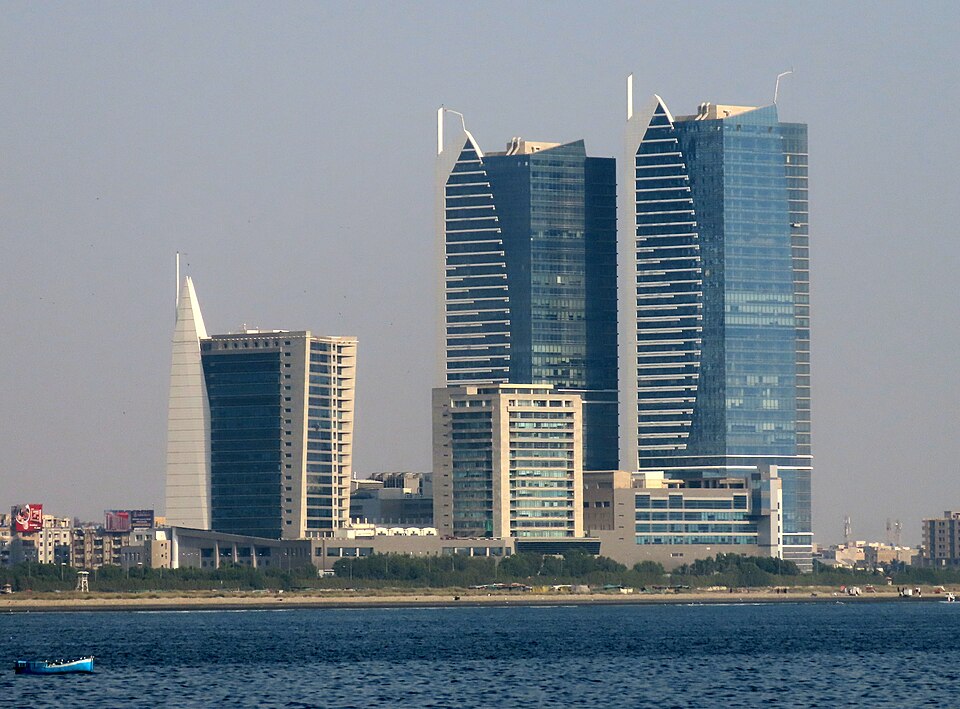
Karachi lies at coordinates 24.9056N, 67.0822E, positioned at just 8 meters above sea level on the Arabian Sea coast. The city's strategic location has shaped its entire history—as a natural harbor and gateway to the Indian subcontinent, it became one of South Asia's most important trading ports. The coastline stretches for approximately 25 kilometers, offering expansive views of the Arabian Sea and defining the city's character as a maritime center.
The landscape around Karachi is largely flat, with the city built on coastal plains that extend inland. While the immediate vicinity lacks dramatic elevation changes, the broader region includes scrubland and semi-arid terrain typical of southern Sindh province. The city operates in the Asia/Karachi timezone, which aligns with Pakistan Standard Time throughout the year.
Karachi's historical significance emerged gradually over centuries as a trading settlement, but its modern identity took shape after Pakistan's independence in 1947. The city became the nation's first capital, serving in that role until 1959, a period when it absorbed millions of migrants and refugees and underwent rapid transformation from a colonial port town into a bustling national hub. This historical moment left an indelible mark on the city's character—its diversity and cosmopolitan outlook trace directly to this founding era.
The British colonial period left architectural imprints throughout Karachi, and the city's subsequent decades as capital saw ambitious development projects that still shape its urban landscape today. Though the capital moved to Rawalpindi and later to Islamabad, Karachi never lost its status as Pakistan's premier economic and industrial center. This transition from political to economic primacy actually consolidated the city's identity as a forward-looking, business-oriented metropolis less bound by traditional conventions than many other Pakistani cities.
Karachi's appeal lies largely in experiencing its urban energy, coastal atmosphere, and cultural diversity rather than visiting isolated monuments. The Arabian Sea waterfront offers space for walks and reflection, particularly in areas where the coast meets the city. The Clifton and Defence neighborhoods showcase different facets of urban life, from seaside promenades to bustling markets and residential areas that reflect the city's varied communities.
The city's cultural institutions and public spaces reveal layers of history and contemporary life. Explore neighborhoods that showcase different ethnic and religious communities—Karachi's remarkable diversity means that walking through different districts genuinely feels like moving between different worlds. Markets and bazaars reveal the trading spirit that built this city, offering authentic glimpses of commercial life that has defined Karachi for centuries. The coastal areas provide relief from the urban intensity, and sunset viewing along the sea is a cherished local activity. Museums and cultural centers throughout the city document Karachi's evolution and serve as gateways to understanding its role in Pakistan's story.
The natural environment around Karachi, while not dramatically scenic, rewards exploration. Mangrove forests exist in the city's eastern reaches, representing important coastal ecosystems. Nearby areas offer day-trip possibilities for those seeking respite from urban intensity, though much of the surrounding region consists of semi-arid landscape.
Jinnah International Airport serves as the primary air gateway, connecting Karachi to major cities across Pakistan and internationally. The city is also reachable by train and road networks linking it to other Pakistani cities and, historically, to regional connections. Within the city, transportation operates through buses, taxis, and ride-sharing services, though navigating the sprawling metropolitan area requires patience and local knowledge. The flat geography makes cycling possible in some areas, and walking remains viable in many neighborhoods, though traffic and climate considerations matter.
Karachi functions as Pakistan's economic engine, driving industrial production, financial services, and trade that extends far beyond the city's boundaries. The port remains crucial to national commerce, while the city's manufacturing sector, textile industry, and growing technology sector employ millions. This economic vitality creates a distinctive atmosphere—Karachi residents tend toward pragmatism and entrepreneurial energy, and the city's business-oriented culture produces a somewhat more secular, less tradition-bound social environment than many other Pakistani cities.
The diversity of Karachi's population—encompassing Urdu-speakers, Sindhis, Pashtuns, Punjabis, Baloch communities, and religious minorities—creates a cosmopolitan fabric unique in Pakistan. This plurality extends to food, language, and cultural expression, making Karachi feel distinctly different from other Pakistani cities. For residents, daily life involves navigating this complexity, engaging with different communities, and contributing to one of Asia's most economically significant metropolitan areas.
Karachi's population stands at 11,624,219 within the city proper, though the greater metropolitan area is substantially larger. The city sits at 8 meters elevation above sea level and operates on Asia/Karachi timezone. The climate is subtropical, with hot summers and mild winters, and the Arabian Sea provides the maritime influence that moderates temperatures. Best visiting periods are typically November through February, when temperatures are most comfortable for exploration.
View larger map — © OpenStreetMap contributors